
"17th century Paris"
200 article(s) found

Cafes in Paris don't just drink coffee! Getting lost is the best way to meet a cafe.
For the exchange of professional baristas, please follow the coffee workshop (Wechat official account cafe_style) Caf de lIndustire, the traditional cafes hidden in Paris on the corners of the streets are the most populous, those who rush to have a drink, come to chat, read books and newspapers. There are stories on every corner. Photo / Xie Zhongdao, operators provide open-air seats that do not wake up in the morning, a corner of the setting sun

Boutique cafes recommend cafes in Paris
I've been going to many cafes in recent years, and I'm getting bored. I often daydream about the old cafes, the old beauties that can only be read in books but cannot be experienced in person. For example, when it comes to cafes in Paris today, people's first impression is the relaxed and enjoyable atmosphere of relaxed seats in the shade of trees or in the Arbor. But in the past, when Parisians drank coffee, it was not like this at all.

Cafes in Paris recommend boutique cafes
I've been going to many cafes in recent years, and I'm getting bored. I often daydream about the old cafes, the old beauties that can only be read in books but cannot be experienced in person. For example, when it comes to cafes in Paris today, people's first impression is the relaxed and enjoyable atmosphere of relaxed seats in the shade of trees or in the Arbor. But in the past, when Parisians drank coffee, it was not like this at all.

Coffee Culture in Coffee City Caf é in Paris
I've been going to many cafes in recent years, and I'm getting bored. I often daydream about the old cafes, the old beauties that can only be read in books but cannot be experienced in person. For example, when it comes to cafes in Paris today, people's first impression is the relaxed and enjoyable atmosphere of relaxed seats in the shade of trees or in the Arbor. But in the past, when Parisians drank coffee, it was not like this at all.

Left Bank Coffee Legend in Paris Seine left Bank Coffee is really on the left Bank of the Seine in Paris?
Professional coffee knowledge exchange more coffee bean information Please follow the coffee workshop (Wechat official account cafe_style) French writer Balzac once made famous remarks about coffee, and then in recent years in coffee advertisements also kept sending: I am not at home, in the coffee shop; not in the coffee shop, on the way to the coffee shop. Came to Paris, France, this invincible romantic city.

The roasting ceremony changes from brown to black: a new way of drinking coffee
Early baking in the Arab region is a simple program, although we do not have enough historical data to reproduce this baking program, but it should be roughly similar to the baking program still used in the Arab region today. Another European historian, William Pargrave (Uilliam Palgrave), wrote the Arab Journey to the Middle East in 1863 (temporary translation)

Where on earth does coffee come from?
Around 900 AD, when a shepherd in the Cafa region of Ethiopia was grazing in the mountains, he found that the sheep were competing for a kind of red berry. After eating, the sheep were jubilant, and the shepherd was worried all night that his sheep had eaten some harmful food. Who knew the sheep were safe and sound the next day. This unexpected discovery prompted the shepherd to collect this wild fruit and boil juice to quench his thirst.

Where on earth does coffee come from?
Around 900 AD, when a shepherd in the Cafa region of Ethiopia was grazing in the mountains, he found that the sheep were competing for a kind of red berry. After eating, the sheep were jubilant, and the shepherd was worried all night that his sheep had eaten some harmful food. Who knew the sheep were safe and sound the next day. This unexpected discovery prompted the shepherd to collect this wild fruit and boil juice to quench his thirst.

Poetic prodigy Lambo Qiwen went to Egypt to do coffee business
Ethiopia is dominated by wild coffee forests. If you want to chew coffee fruit or drink coffee, you can pick it in the forest. Therefore, there is no coffee cultivation industry in ancient Ethiopia. Yemen had a large-scale coffee cultivation industry and coffee trade with Europe as early as the 15th and 16th centuries, and Ethiopia had no record of coffee trade until the 19th century. In 1838, Ethiopia passed through the Red Sea port.

The introduction of French coffee culture is not in the coffee shop, but on the way to the coffee shop.
Coffee plays an important role in the daily life of the French. Coffee is as important to the French as tea is to the Chinese. As we all know, coffee has become an important drink sweeping the world. The mellow aroma of coffee makes people infatuated and makes people have endless aftertaste in the realm of selflessness. The French said, "I'm not in the cafe. I'm on the way to the cafe."
Look for the footprints of the old cafe
It rained all over the world, so we all took shelter under the eaves of coffee. With a coffee shop, it seems to be close to a dream. Poets, artists, or ordinary people all gather here, watching their own tables, lights and thoughts, drinking coffee, talking about life, talking about ideals, and occasionally laughing and cursing with nothing to do. Like the prelude to a musical, a coffee shop

The god of poetry, Tong Lanbo, abandoned his articles and went to Egypt to do coffee business, coffee culture.
Ethiopia is mainly a wild coffee forest, want to chew coffee fruit or drink coffee, go into the forest to pick, so there was no coffee cultivation in ancient Ethiopia. Yemen had a large-scale coffee cultivation industry and coffee trade with Europe as early as the 15th and 16th centuries, and Ethiopia did not have a record of coffee trade until the 19th century. In 1838, Ethiopia passed through the port of the Red Sea

Coffee history and culture common sense where does coffee come from?
Around 900 AD, when a shepherd in the Cafa region of Ethiopia was grazing in the mountains, he found that the sheep were competing for a kind of red berry. After eating, the sheep were jubilant, and the shepherd was worried all night that his sheep had eaten some harmful food. Who knew the sheep were safe and sound the next day. This unexpected discovery prompted the shepherd to collect this wild fruit and boil juice to quench his thirst.
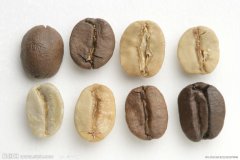
The god of poetry, Lambo, abandoned the article to do coffee business in Egypt, boutique coffee beans, Ethiopian flavor.
Ethiopia is mainly a wild coffee forest, want to chew coffee fruit or drink coffee, go into the forest to pick, so there was no coffee cultivation in ancient Ethiopia. Yemen had a large-scale coffee cultivation industry and coffee trade with Europe as early as the 15th and 16th centuries, and Ethiopia did not have a record of coffee trade until the 19th century. In 1838, Ethiopia passed through the port of the Red Sea

European Men's Coffee complex
The word coffee comes from the Greek word Kaweh, which means strength and enthusiasm. Drinking coffee is not only a pastime, its rich cultural connotation is a pursuit of an ideal way of life. Men love coffee because it is as powerful as a man without losing its gentle and dignified temperament. Men once loved coffee and ignored the women around them, causing British women in the 17th century to collectively petition for coffee.

The spread and Development History of Coffee in Europe
From the end of the 15th century to the beginning of the 16th century, coffee was already a popular drink in the Middle East, but it was also regarded as a kind of medicine. European ambassadors and merchants in the Turkish Empire also believed that coffee was a healthy drink with special curative effects, and many positive comments helped to import coffee into Europe. Lovov, a famous German doctor and botanist, wrote a book about coffee as early as 1582, but
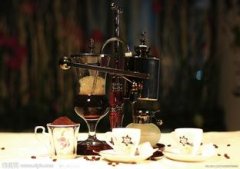
The Cultural course of Coffee and European Coffee
From the end of the 15th century to the beginning of the 16th century, coffee was already a popular drink in the Middle East, but it was also regarded as a kind of medicine. European ambassadors and merchants in the Turkish Empire also believed that coffee was a healthy drink with special curative effects, and many positive comments helped to import coffee into Europe. Lovov, a famous German doctor and botanist, wrote a book about coffee as early as 1582, but

Coffee making skills: three steps to easily reduce the coffee grounds in the pressure pot
Following Cafe Review (official Wechat account vdailycom) found that anyone who likes homemade coffee in a beautiful cafe knows that using a law press to make coffee will more or less produce some coffee grounds. These coffee grounds will make the coffee in the French kettle cloudy, which will more or less affect the quality of the coffee. Faced with this problem, what should we do? Want to reduce
The spread of Coffee around the World and the Culture of Cafe
When Europeans and people from other countries come into contact with coffee drinks, some people soon fall in love with them. Businessmen and capitalists covet the benefits and profits of coffee.
World Coffee Culture Coffee is the devil's trick?
Europeans first came into contact with coffee around 1515-1519, but were not interested in it for a long time. In 1585, 30 years after the emergence of cafes in Istanbul, the Vatican envoy Morosini reported that these people were all humble, tacky and unenterprising, just wasting their time all day. So, they just sit around all the time